SignalScan
AI-powered intelligence for understanding people and brands from their public signals.
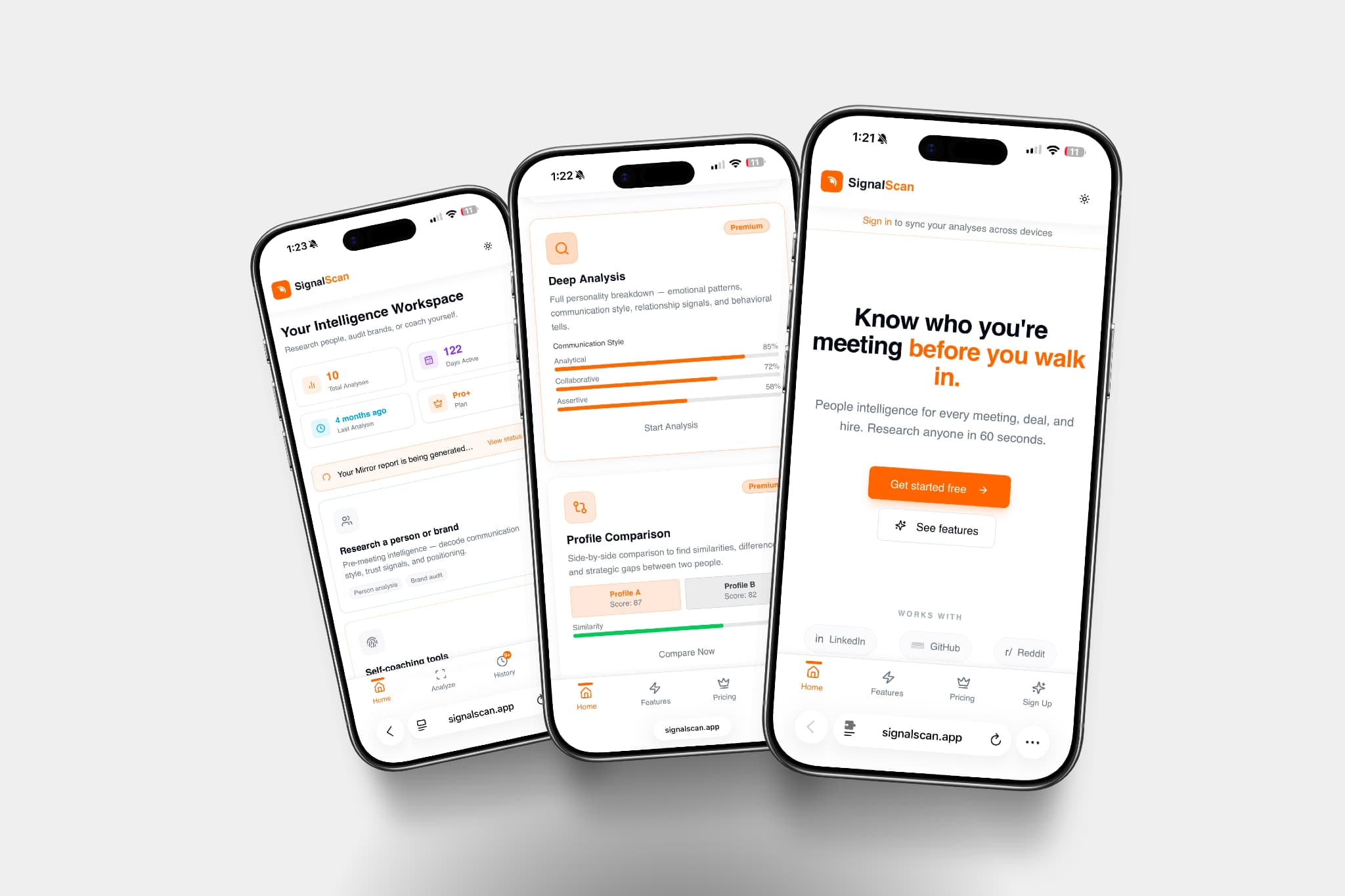
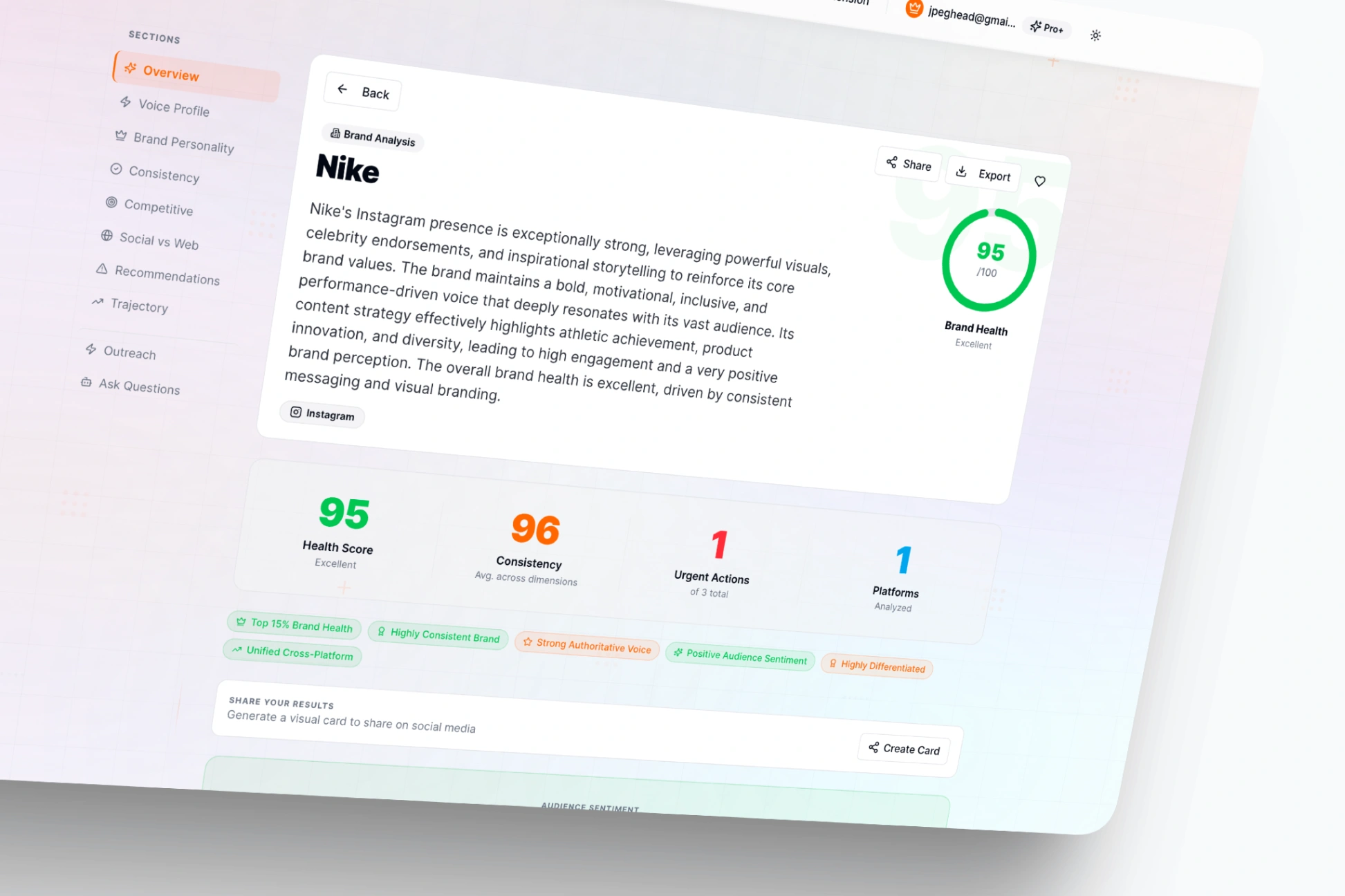
Most of the information you need to understand a person or brand is already public — scattered across social profiles, websites, interviews, press mentions, and content they've published. The problem isn't access, it's synthesis. Reading through all of it manually takes hours, and even then you're left with raw data rather than insight. SignalScan was built to close that gap: feed it a person or brand, and it pulls together their public signals into a coherent, structured picture of who they are, what they care about, and how they operate.
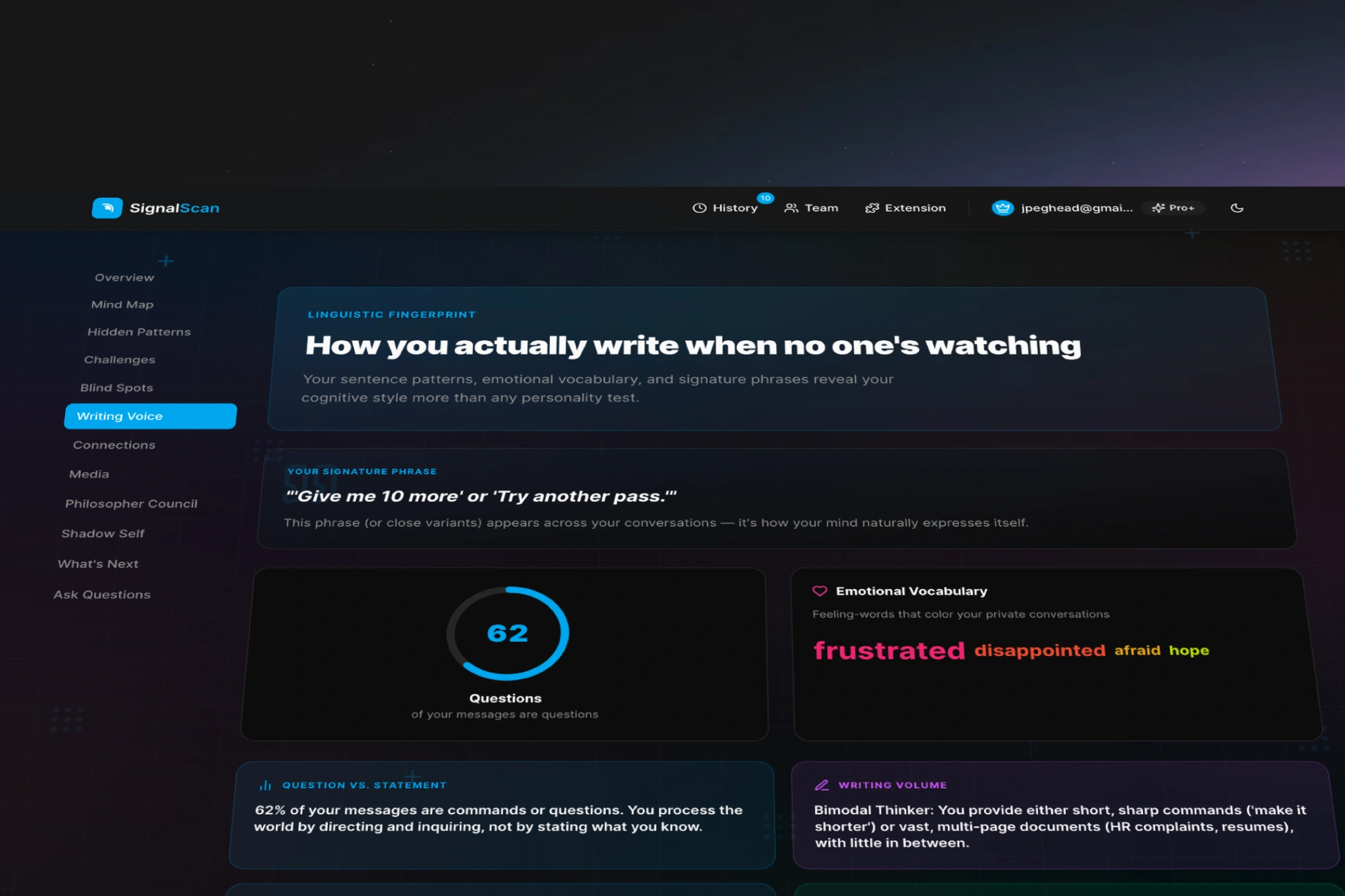
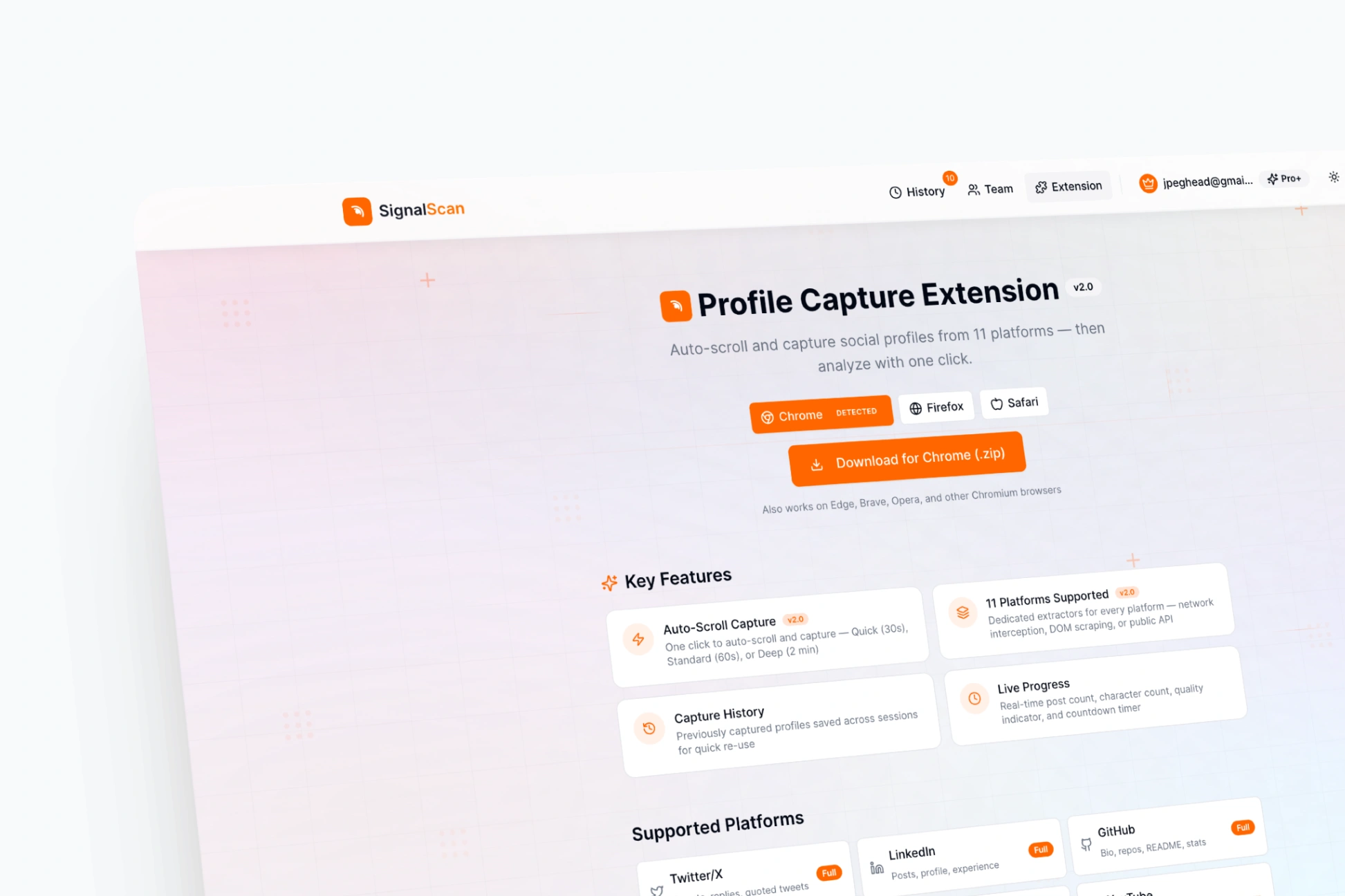
The core engine is an AI pipeline that aggregates and analyzes public-facing content — social media activity, published writing, brand messaging, media appearances, and more — then distills it into actionable intelligence. Rather than returning a list of links or a summary paragraph, SignalScan produces structured insight: positioning, tone, key themes, communication patterns, and the underlying values or priorities that show up consistently across sources. The goal is to give you the kind of understanding that would normally require a researcher and several hours of work.
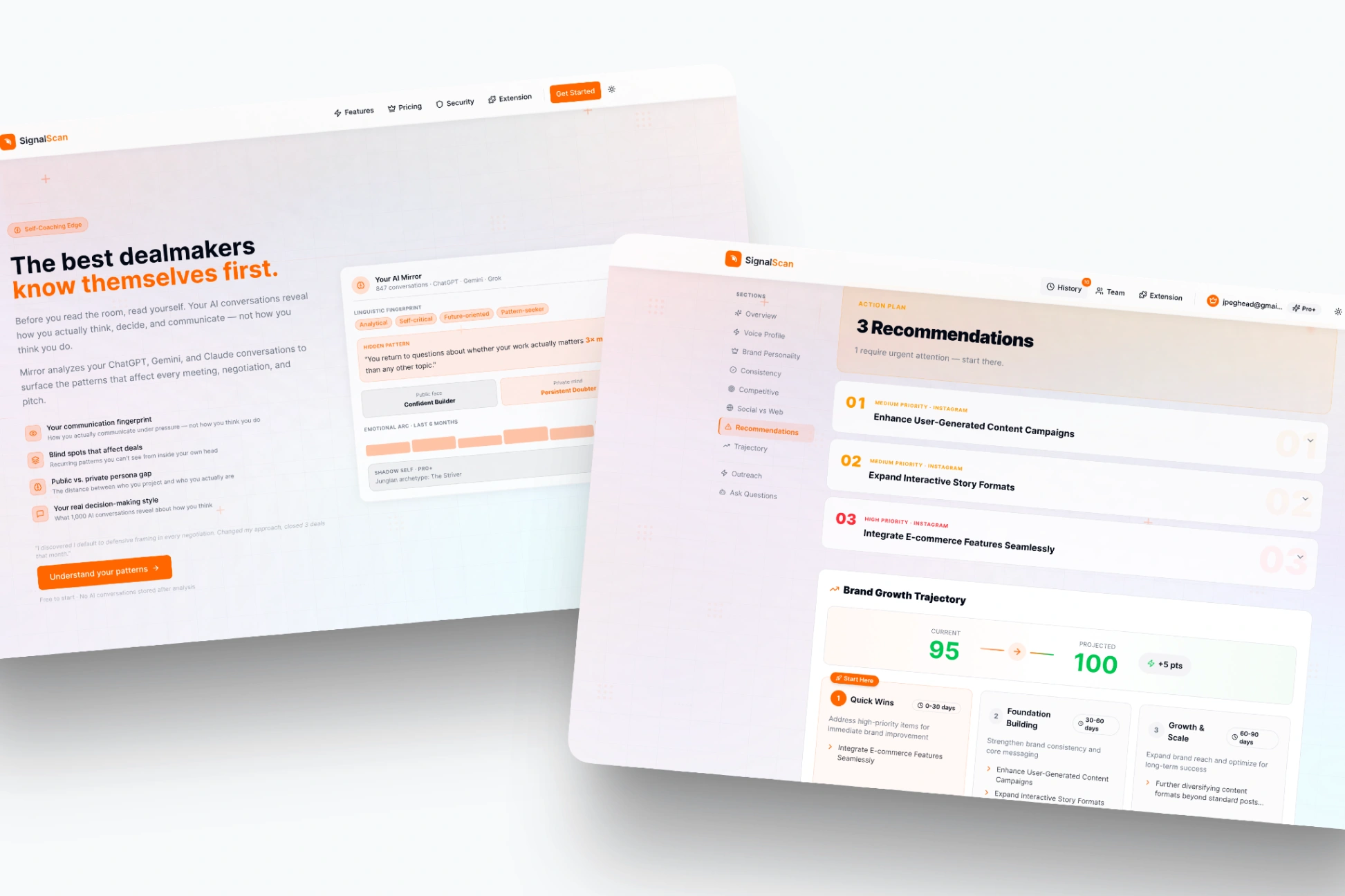
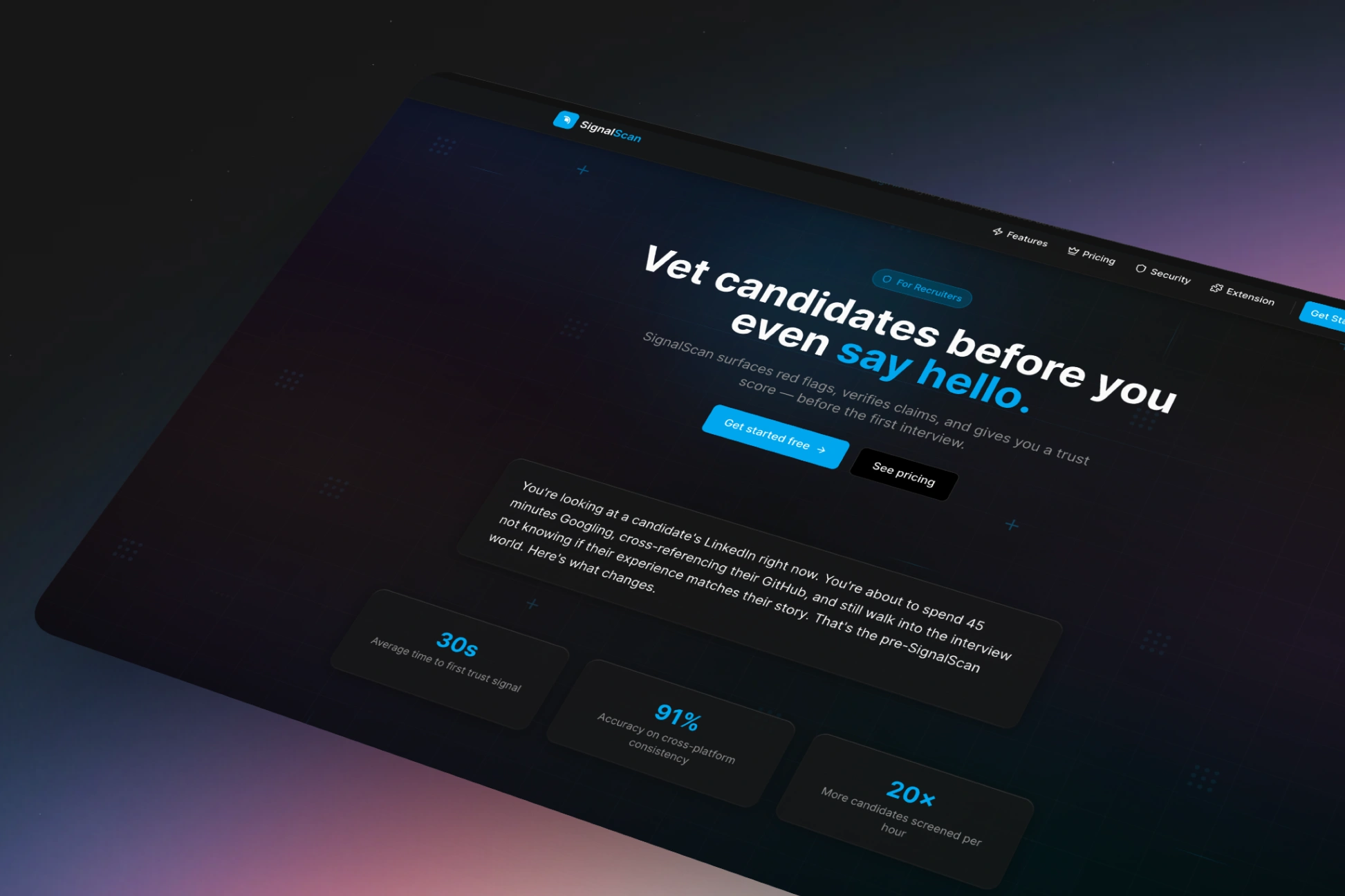
The use cases are varied but share a common thread: any situation where you need to quickly develop a real understanding of someone before engaging with them. That includes sales teams researching prospects before outreach, recruiters evaluating candidates, founders doing due diligence on potential partners or investors, journalists profiling subjects, and PR or communications professionals mapping the competitive landscape. In each case, the value is the same — going into a conversation or decision with genuine context rather than surface-level familiarity.
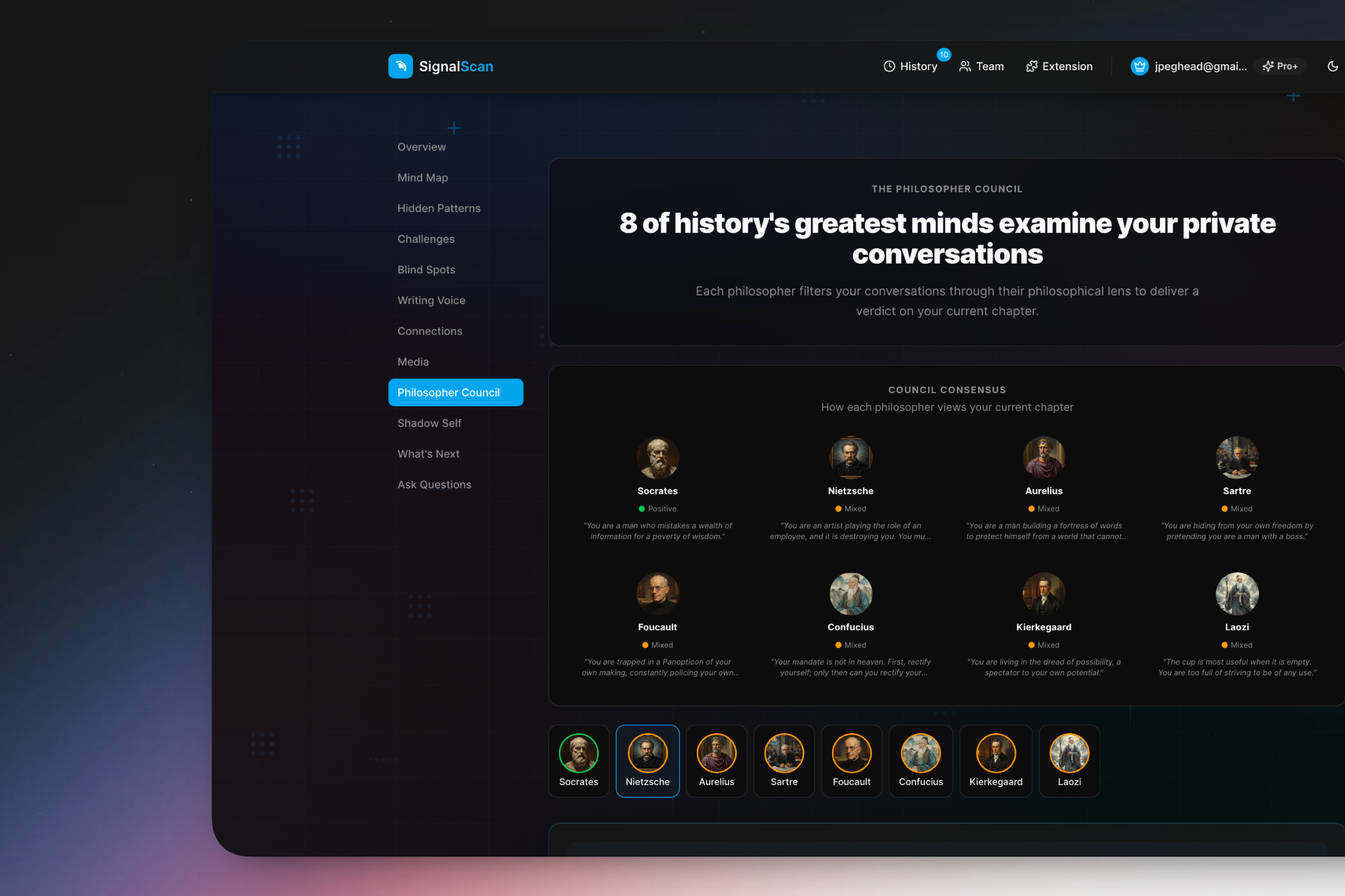
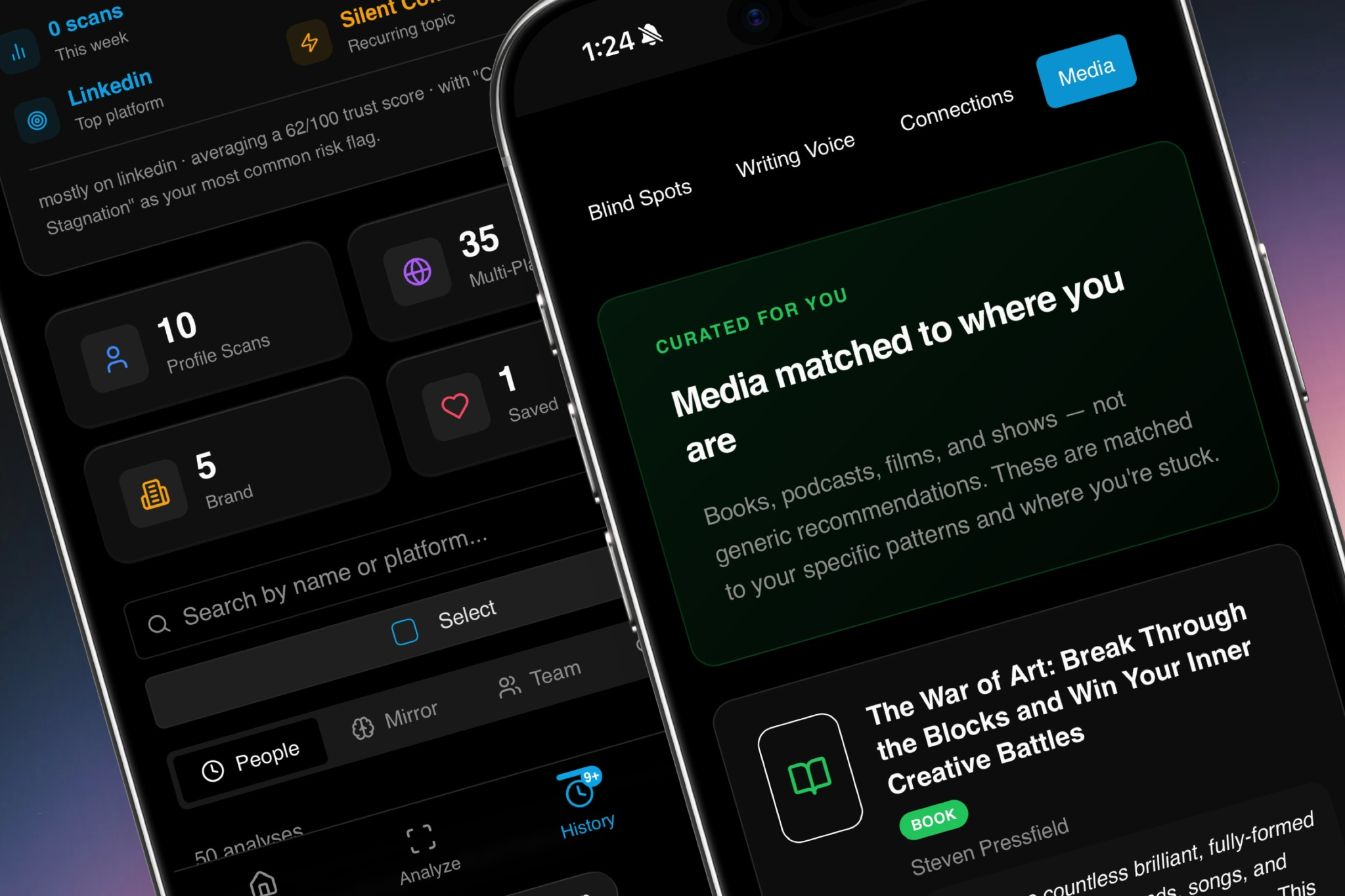
What makes the approach interesting technically is the challenge of signal quality. Public data is noisy — people post things that aren't representative, brands put out inconsistent messaging, and recency matters a lot. The AI layer has to weigh signals by relevance, recency, and consistency rather than just volume. The UX reflects this too: rather than overwhelming users with everything found, SignalScan surfaces what's most diagnostic — the patterns and signals that actually tell you something meaningful about how a person or brand thinks and behaves.
More from the work